Not everyone will understand what you’ve survived. They didn’t see the fear, the shame, or the breaking down that brought you to your knees under a moonless night.
They don’t know what it felt like to live inside the storm, or the way your body remembers what your voice could not say. They didn’t feel the weight of silence pressing against your chest, or the courage it took just to keep breathing when you wanted to disappear.
Survival Leaves No Witnesses
The hardest truth about surviving is that it often leaves no witnesses. To the outside world, you may look “fine.” You may even look “strong.” But the fragments you carried in secret tell another story.
It’s the story of a woman who stitched herself back together with trembling hands and invisible thread. The story of someone who learned to move through life while holding the rubble of her former world in her palms.
And because they didn’t see that journey, they may never understand the cost of your healing.
Healing Is Not Meant to Be Understood by Everyone
Here’s what I need you to know: your metamorphosis is sacred.
It is not for their approval. It is not for their comprehension.
You don’t owe anyone an explanation. You don’t exist to convince them that your story is real. You are not required to shrink your truth so they can be comfortable.
Your healing is not theirs to measure. It is yours to claim.
Becoming
Healing is not about returning to who you once were. It’s about rebirthing yourself into the woman you were always meant to be— the one who lived inside you before the world tried to silence her, before the shame, the fear, the breaking down.
You are not broken. You are becoming. You are unbecoming everything the world told you to be so you can finally rise into everything you are.
A Final Word
If you feel misunderstood, unseen, or dismissed on your healing journey, remember this: you’re not here to convince them.
You’re here to live fully. To stand in your sovereignty. To honor the sacred work you’ve done.
Because your metamorphosis is not small. It is sacred.
Protect it. Honor it. And never forget— you don’t owe anyone an explanation for your survival, your becoming, or your light.
“I have done nothing all summer but to wait for myself to be myself again.” — Georgia O’Keeffe
As this season draws to a close, I find myself reflecting on the power of waiting. I think about how healing often unfolds in silence. It happens in slowness and unseen places. What follows is not an explanation or a roadmap, but a prayer I needed to write for myself.
I. The Courage to Wait
There is a wisdom in waiting that our culture does not honor. We live in a world obsessed with productivity, speed, and achievement. Rest is mistaken for laziness, and silence is confused with absence.
All summer, I waited. For the quiet to soften me. For the storms inside to pass. For the woman I lost along the way to rise and meet me again.
And she is coming— slowly, fiercely, wholly— like a wildflower breaking through stone, like the horizon pulling light back into itself.
This is what healing often asks of us: to trust the invisible underground work, and the gestation that can’t be hurried. Seeds must split in the dark before they bloom in the light. Similarly, we must surrender to seasons of waiting. Only then can we rise whole again.
II. The Feminine Rhythm
In the feminine soul, healing does not move in straight lines. It circles and spirals. It withdraws before it returns. It rests before it creates.
This rhythm is not weakness—it is ancient wisdom. The body knows how to heal. The spirit knows how to return. Our task is not to force it, but to allow it. To trust that our becoming is not delayed; it is ripening.
III. The Dawn Always Comes
We don’t always heal by doing more. Sometimes we heal by waiting. By letting silence do its work. By trusting that the parts of us we thought were gone are only gathering strength to return.
If you’ve been waiting for yourself, know this: she is still here. She is still coming back.
And when she rises, it will be with roots deeper, branches stronger, and a light no storm can take away.
Trauma leaves lasting imprints on our lives, shaping how we see the world, others, and ourselves. The aftermath can feel overwhelming, as if we are left picking up the pieces of a life we no longer recognize. But within the wreckage, growth is possible.
Post-traumatic growth is the process by which survivors not only heal but transform, discovering new strengths, perspectives, and opportunities they may never have considered before. It is not about erasing pain, but about finding meaning beyond it—emerging from the shadows with a renewed sense of self.
The Hidden Strength Within Trauma
At first, survival is the only focus. The body and mind work to process the shock, the loss, the enormity of what has happened. But over time, survivors may notice something new stirring within them—a strength they never knew they had.
Resilience takes root. The realization dawns: I made it through. The challenges that once seemed insurmountable now serve as proof of inner strength.
Life feels more precious. Trauma often shifts our perspective, deepening our appreciation for what truly matters—love, presence, connection.
New doors open. What once felt limiting no longer holds power. Survivors may explore new paths, careers, hobbies, or passions.
Relationships evolve. Adversity fosters empathy and deeper connections, helping survivors build meaningful relationships rooted in authenticity and trust.
Spirituality shifts. Whether through faith, personal reflection, or connection with nature, many find themselves searching for—and often discovering—new meaning in life.
Yet, recognizing this growth is not always easy. Moving forward takes time, intention, and the right tools.
Steps Toward Growth After Trauma
Though each survivor’s path is unique, there are common ways to nurture personal growth in the wake of trauma.
Mindfulness and Breathwork – Practices like meditation, deep breathing, and yoga can help regulate emotions and bring awareness to the present moment.
Self-Compassion – Healing requires patience. Treating ourselves with the same kindness we would offer a loved one allows for deeper emotional recovery.
Creative Expression – Writing, painting, music, and other creative outlets provide ways to process emotions that words alone may not capture.
Nature and Grounding Practices – Spending time outdoors, walking barefoot on the earth, or simply feeling the warmth of the sun can be profoundly healing.
Therapeutic Support – Trauma-focused therapy, cognitive behavioral techniques, and body-based approaches like trauma-sensitive yoga help survivors process and move through pain.
Building Connection – Seeking support from trusted friends, family, or survivor communities can reduce isolation and provide validation.
Reframing the Narrative – Growth often comes from seeing trauma not as an ending but as a transformation—an opportunity to redefine priorities and reclaim personal power.
The Journey is Yours
Healing is not about returning to who we were before trauma. It is about becoming someone new—someone who carries their past with wisdom, not weight.
Post-traumatic growth does not mean we forget the darkness, nor does it mean we are grateful for the pain. But it does mean that in the process of healing, we can find strength, purpose, and the courage to emerge from the shadows—free, untethered, and fully alive.
Emerging from Trauma: The Power of Post-Traumatic Growth
Trauma leaves lasting imprints on our lives, shaping how we see the world, others, and ourselves. The aftermath can feel overwhelming, as if we are left picking up the pieces of a life we no longer recognize. But within the wreckage, growth is possible.
Post-traumatic growth is the process by which survivors not only heal but transform, discovering new strengths, perspectives, and opportunities they may never have considered before. It is not about erasing pain, but about finding meaning beyond it—emerging from the shadows with a renewed sense of self.
The Hidden Strength Within Trauma
At first, survival is the only focus. The body and mind work to process the shock, the loss, the enormity of what has happened. But over time, survivors may notice something new stirring within them—a strength they never knew they had.
Resilience takes root. The realization dawns: I made it through. The challenges that once seemed insurmountable now serve as proof of inner strength.
Life feels more precious. Trauma often shifts our perspective, deepening our appreciation for what truly matters—love, presence, connection.
New doors open. What once felt limiting no longer holds power. Survivors may explore new paths, careers, hobbies, or passions.
Relationships evolve. Adversity fosters empathy and deeper connections, helping survivors build meaningful relationships rooted in authenticity and trust.
Spirituality shifts. Whether through faith, personal reflection, or connection with nature, many find themselves searching for—and often discovering—new meaning in life.
Yet, recognizing this growth is not always easy. Moving forward takes time, intention, and the right tools.
Steps Toward Growth After Trauma
Though each survivor’s path is unique, there are common ways to nurture personal growth in the wake of trauma.
Mindfulness and Breathwork – Practices like meditation, deep breathing, and yoga can help regulate emotions and bring awareness to the present moment.
Self-Compassion – Healing requires patience. Treating ourselves with the same kindness we would offer a loved one allows for deeper emotional recovery.
Creative Expression – Writing, painting, music, and other creative outlets provide ways to process emotions that words alone may not capture.
Nature and Grounding Practices – Spending time outdoors, walking barefoot on the earth, or simply feeling the warmth of the sun can be profoundly healing.
Therapeutic Support – Trauma-focused therapy, cognitive behavioral techniques, and body-based approaches like trauma-sensitive yoga help survivors process and move through pain.
Building Connection – Seeking support from trusted friends, family, or survivor communities can reduce isolation and provide validation.
Reframing the Narrative – Growth often comes from seeing trauma not as an ending but as a transformation—an opportunity to redefine priorities and reclaim personal power.
The Journey is Yours
Healing is not about returning to who we were before trauma. It is about becoming someone new—someone who carries their past with wisdom, not weight.
Post-traumatic growth does not mean we forget the darkness, nor does it mean we are grateful for the pain. But it does mean that in the process of healing, we can find strength, purpose, and the courage to emerge from the shadows—free, untethered, and fully alive.
We are in the cross fires of a political situation that shouldn’t be political at all. I know there are people who will call me brainwashed and misguided. They will say that George Orwell is turning in his grave because 1984 has come to fruition. I know these people well. Some of them have my same blood. Some of them know what happened to me back in 1984.
I was taken advantage of by a guy from a prep school. He locked me in his room, laid on top of me and hurt me. He took my virginity. I cried for him to STOP! He didn’t. When he finally got up, he put his pants on and leaned against the wall of the darkened room, the candle light was flickering across his evil face as he said in a very flip way, “What do you expect? I have wanted you for over a year?”
I was staying with my best friends family at the time. I was bleeding heavily. I was terrified. However, I didn’t call my parents. I didn’t tell them when I got home. I didn’t tell anyone. I tucked that experience away inside of me for years and “forgot” about it. Funny thing about trauma…it likes to pop up every now and then in the worst of circumstances. When I turned 22 I finally told my mother. She took to her bed for 3 days and cried the entire time. My father doesn’t know to this day because I saw how my mother reacted and I just knew it would kill my father.
People have been blaming the victim forever. Seriously, it is the culture of the world. A victim can be your mother, father, sister, brother, child, friend, and yes, even you. To add insult to serious injury it is also made clear that the victim is in someway responsible for the attack. This creates a wall of isolation and shame. This wall can barricade a victim behind it’s tall chalky cold walls for years. Sometimes for life. The mind is a mysterious thing. We have learned some about what trauma does to a persons mind though. I can speak to this because I am not only a survivor of rape, but of domestic violence. In an attempt to protect you, your mind will selectively shelf memories. It’s as though it opens a door within and shoves the trauma into it, and then it slams the door. Sometimes the door opens up again. Sometimes it doesn’t.
I live with debilitating PTSD. If you were to ask me what I struggle most with day to day I would say, my memory. I have big blocks of time missing due to domestic violence. I can’t remember much of my child’s first years. This is because during this time his father was so abusive to me that in order to survive my mind shut the memories away. The good, the bad, and the ugly.
I am not mad about my situation. Rather I have chosen to channel that into helping other women recover, reclaim their lives, and move on after abuse and assault. This is how I heal. I run Rebel Thriver and this has become my life’s work. One of our agreements is no politics and no religion. This is because we know that this type of trauma doesn’t discriminate. I do not want to alienate any survivor over a political opinion or a religious belief. I believe that a victim needs to be heard no matter how long it takes for them to find their voice. And when they do finally speak they should not be shamed for it.
You do not know the path another has walked. We really need to start taking a step back at how things have been so that we can make changes and learn to move humanity forward in a more positive way. I believe that education is the only way. People can learn to become more understanding, better listeners, and develop empathy. We are capable of re-framing our thinking and doing better than the generations that came before us. We need to move towards coming together to tear down the old ways that allow isolation and victimization. We need to try to make this a better place for our children.
All I can do is continue to help the people who are trying to rebuild their lives and heal after trauma. I do not take political sides. I will never make a victims story divisive. It’s hard to stay out of the firing line these days. I pray the truth comes out and that people in powerful places are no longer able to wield their power to hurt others. Perhaps I am a bit idealistic, but that’s how I am and I will never give up striving to do better. My calling in this life is to help heal the wounds of survivors. It’s not fancy work, but it is everything to me, for how can we heal the world if we don’t work on healing it’s wounds?
Twelve years ago I walked away from my very sick and abusive husband. I literally walked away with a baby on either hip and the clothes on our backs one freezing winter night. I walked away from my hugely successful dream career as a creative Design Director in NYC, from my home, my friends, and colleagues. Just like that, life as I knew it disappeared.
In the last 8 years I started a movement called Rebel Thriver. I have run private groups, workshops, and done personal development coaching all for free in an attempt to help women (and men too) learn how to rise above the mentality of survivor to become a thriver. I also have a team of 8 women who volunteer to help me do this. I knew what it was like to live isolated and alone. I knew that support just didn’t exist once you were out of the initial triage phase (after leaving abuse). I wanted to reach out to help others because there was none for me when I needed it. I wanted to create a community for myself and others. Today the Rebel Thriver Tribe has grown to almost 300K and we span the globe. They are an achingly beautiful group of people.
My situation is extreme. My kids and I had to change our names and social security numbers 3 times in order to stay alive. It was in this time that I started to DREAM about opening up a beautiful “camp” for people to come in order to learn to heal, connect to self, and be educated on self connection, self development, healing, nutrition, etc. An escape for women (and teens) to connect to their inner voices in order to create a path to self love. I want to help these women who have been systematically broken down to lay a brand new stable foundation for them to start over and build onto. I want to help them find connection, a new family, and happiness. A place where they can feel like they belong. That their story matters. That they matter.
I desperately want to do public speaking (high schools, corporate gigs, Ted Talks, Mind Valley, etc), but I cannot put my face out in the public sector yet, as I still have a minor child and it is not safe for us. So for now my dream is to build this beautiful sacred space (in the islands somewhere) as a place of healing and new beginnings. This is where I will start my speaking and teaching practice in order to prepare for the day when I can branch out publicly.
In the process of all of this I will create a new level to the Rebel Thriver Tribe. A place where I can help people find employment and create a healthy life with positive human connections where they can help others to heal and grow. There are so many people who need to overcome trauma (domestic abuse, sexual abuse, recovery from substances and emotional abuse). While the situations are different the way back to living a healthy life is all very similar. There are SO many people who need help and guidance and I want to be the one to give them a chance.
I am currently taking a business seminar called Business Freedom, by Eric Edmeades. He is offering a free Business Freedom Week Seminar this year that I just know would help me to achieve my dreams to help others (AND i do need help). It would give me a way to connect with other business leaders and learn from the best. It will help me to really focus on my business plan and come up with a blueprint as to how best to make the dream become a reality. This seminar will help teach me so that I can in turn help others on a grander scale.
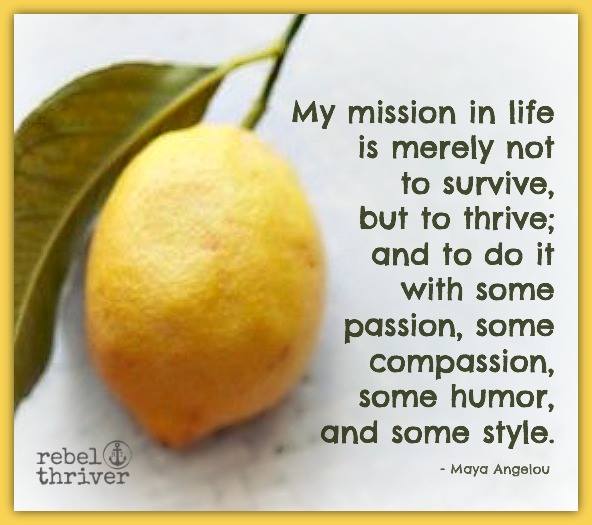
I am an extreme example of learning to thrive whilst my life is still being shadowed by control and abuse of another. I am able to show others what thriving looks like, and that they don’t have to wait to start living. Domestic Violence helped me to learn to embrace my life and be even grateful for my circumstances…for so many reasons. I know how to turn lemons into lemonade many times over.
I am loving this class. Thank you Eric so very much for your generosity. Eric is also the creator of Wildfit of which I am currently a Wildfit participant (this class is helping me keep my mind off of Bread!!!!) Check out my blog post My Journey to Wellness to follow me on my journey with Wildfit. Stay tuned and thanks for your support.


 We are in the cross fires of a political situation that shouldn’t be political at all. I know there are people who will call me brainwashed and misguided. They will say that George Orwell is turning in his grave because 1984 has come to fruition. I know these people well. Some of them have my same blood. Some of them know what happened to me back in 1984.
 In the last 8 years I started a movement called Rebel Thriver. I have run private groups, workshops, and done personal development coaching all for free in an attempt to help women (and men too) learn how to rise above the mentality of survivor to become a thriver. I also have a team of 8 women who volunteer to help me do this. I knew what it was like to live isolated and alone. I knew that support just didn’t exist once you were out of the initial triage phase (after leaving abuse). I wanted to reach out to help others because there was none for me when I needed it. I wanted to create a community for myself and others. Today the Rebel Thriver Tribe has grown to almost 300K and we span the globe. They are an achingly beautiful group of people.